18/08/2026 21:31pm
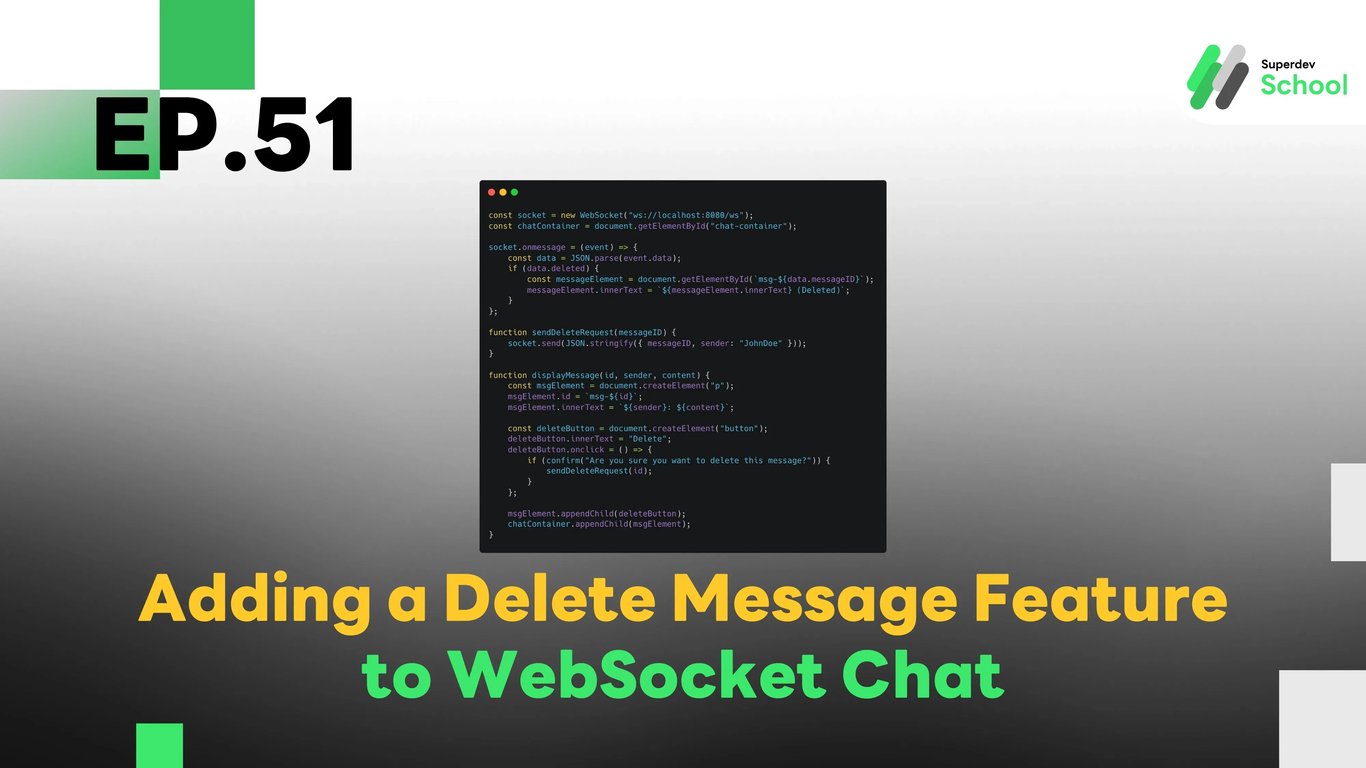
EP.51 Adding a Delete Message Feature to WebSocket Chat
#WebSocket
#WebSocket Chat
#Delete Messages
#Chat App Development
#WebSocket Feature
#programming
#Go
#Backend
#Frontend
In this article, we’ll discuss adding a delete message feature to WebSocket Chat that enables users to delete messages they’ve already sent in real-time. This feature will be implemented both server-side and client-side.
The steps to implement this feature include updating the database, writing code in the WebSocket Server to handle the deletion, creating a UI delete button on the frontend, and testing the system.
Steps to add a delete message feature to WebSocket Chat:
- Update the database to support message deletion
- Add code to the WebSocket Server to handle message deletion
- Create a delete button UI on the Frontend
- Test the system
Code example for the delete message feature in WebSocket Chat
Database Update
Update the database to support message deletion by adding a deleted column to track the status of deleted messages:
ALTER TABLE chat_messages ADD COLUMN deleted BOOLEAN DEFAULT FALSE;
Code for WebSocket Server (Backend)
Add code to the WebSocket Server to handle message deletion and notify all connected clients:
package main

import (
    "database/sql"
    "encoding/json"
    "fmt"
    "net/http"
    "sync"

    "github.com/gorilla/websocket"
    _ "github.com/lib/pq"
)

type DeleteRequest struct {
    MessageID int    `json:"messageID"`
    Sender    string `json:"sender"`
}

type DeleteResponse struct {
    MessageID int  `json:"messageID"`
    Deleted   bool `json:"deleted"`
}

var (
    clients   = make(map[*websocket.Conn]bool)
    broadcast = make(chan DeleteResponse)
    mu        sync.Mutex
    db        *sql.DB
)

func handleDeleteMessage(w http.ResponseWriter, r *http.Request) {
    conn, _ := upgrader.Upgrade(w, r, nil)
    defer conn.Close()
    clients[conn] = true

    for {
        var request DeleteRequest
        err := conn.ReadJSON(&request)
        if err != nil {
            delete(clients, conn)
            break
        }

        // Delete the message from the database
        _, err = db.Exec("UPDATE chat_messages SET deleted = TRUE WHERE id = $1 AND sender = $2", request.MessageID, request.Sender)
        if err == nil {
            broadcast <- DeleteResponse{MessageID: request.MessageID, Deleted: true}
        }
    }
}

func notifyClients() {
    for {
        msg := <-broadcast
        for client := range clients {
            err := client.WriteJSON(msg)
            if err != nil {
                client.Close()
                delete(clients, client)
            }
        }
    }
}

func main() {
    http.HandleFunc("/ws", handleDeleteMessage)
    go notifyClients()
    fmt.Println("WebSocket Server Running on Port 8080")
    http.ListenAndServe(":8080", nil)
}
Frontend Code (Client)
Create a delete button UI and send a request to the WebSocket Server to delete the message:
const socket = new WebSocket("ws://localhost:8080/ws");
const chatContainer = document.getElementById("chat-container");

socket.onmessage = (event) => {
    const data = JSON.parse(event.data);
    if (data.deleted) {
        const messageElement = document.getElementById(`msg-${data.messageID}`);
        messageElement.innerText = `${messageElement.innerText} (Deleted)`;
    }
};

function sendDeleteRequest(messageID) {
    socket.send(JSON.stringify({ messageID, sender: "JohnDoe" }));
}

function displayMessage(id, sender, content) {
    const msgElement = document.createElement("p");
    msgElement.id = `msg-${id}`;
    msgElement.innerText = `${sender}: ${content}`;

    const deleteButton = document.createElement("button");
    deleteButton.innerText = "Delete";
    deleteButton.onclick = () => {
        if (confirm("Are you sure you want to delete this message?")) {
            sendDeleteRequest(id);
        }
    };

    msgElement.appendChild(deleteButton);
    chatContainer.appendChild(msgElement);
}
Challenge:
Try adding a message confirmation before deletion so that users must confirm before deleting a message!
Next EP:
In the next episode, we’ll explore adding a reply to message feature in WebSocket Chat, which allows users to directly reply to specific messages!