07/06/2026 06:43am
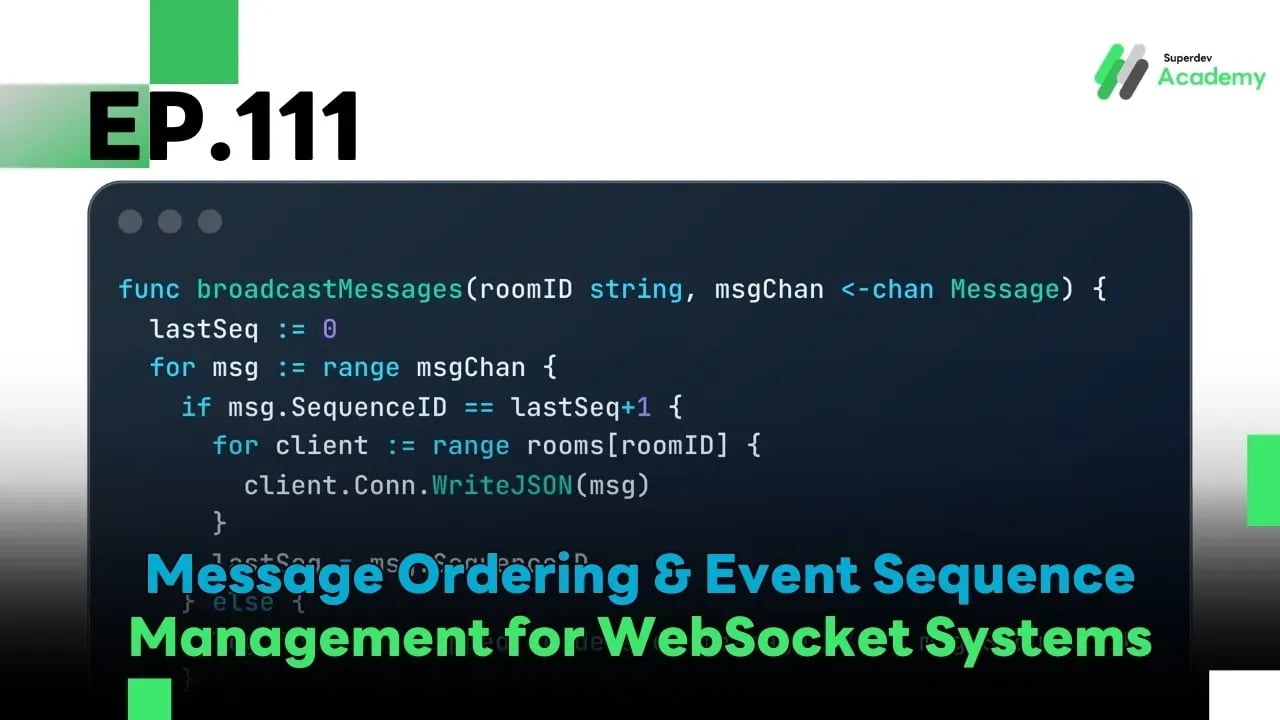
EP.111 Message Ordering & Event Sequence Management for WebSocket Systems
#WebSocket
#Message Ordering
#Event Sequence
#Golang WebSocket
#Go
In WebSocket systems with thousands of concurrent users, one of the most common problems is out-of-order messages. 😩
For example, User A sends 3 messages in sequence, but User B receives them in this order: 2 → 1 → 3.
Common causes include:
- Simultaneous data sending from multiple goroutines
- Reconnects where events aren't synced in time
- Cross-instance broadcasts without proper ordering logic
This episode will walk you through message ordering techniques and event sequence handling to ensure your WebSocket system is 100% accurate and production-ready. 🚀
🧩 1. Why Message Ordering Matters
In real-time systems such as:
- Chat applications
- Online games
- Collaborative editing tools
Message order directly impacts data integrity.
| Example | Potential Impact |
|---|---|
| Chat messages swapped | Misunderstandings between users |
| Game event delays | Lag or incorrect in-game behavior |
| Out-of-order data updates | Incorrect or duplicate information |
⚙️ 2. Assigning Sequence Numbers to All Messages
Each WebSocket message should include a sequence_id (int) to indicate its order per user.
Example JSON structure:
{
  "user_id": "u123",
  "sequence_id": 42,
  "message": "Hello world",
  "timestamp": "2025-11-23T21:15:00Z"
}
Go struct:
type Message struct {
	UserID     string `json:"user_id"`
	SequenceID int    `json:"sequence_id"`
	Content    string `json:"message"`
	Timestamp  string `json:"timestamp"`
}
✅ Increment sequence_id by 1 for each new message and persist it in the database.
🔀 3. Checking Sequence Before Broadcast
In systems with thousands of users and multiple concurrent broadcasts, messages may arrive out of order. Use a queue per chat room and single goroutine to maintain sequence.
Example code:
func broadcastMessages(roomID string, msgChan <-chan Message) {
	lastSeq := 0
	for msg := range msgChan {
		if msg.SequenceID == lastSeq+1 {
			for client := range rooms[roomID] {
				client.Conn.WriteJSON(msg)
			}
			lastSeq = msg.SequenceID
		} else {
			log.Printf("Skipped or delayed message: %v", msg.SequenceID)
		}
	}
}
✅ A single goroutine per room ensures order and reduces race conditions.
🧠 4. Syncing Events Across Instances Using Redis Pub/Sub
In multi-instance systems (e.g., multiple Pods in Kubernetes), use Redis Pub/Sub to sync messages across nodes.
Example code:
func handleRedisMessages() {
	sub := redisClient.Subscribe(ctx, "event_channel")
	for msg := range sub.Channel() {
		var event Message
		json.Unmarshal([]byte(msg.Payload), &event)
		eventQueue <- event
	}
}
✅ Push events into a shared eventQueue and sort them by sequence_id before broadcasting.
📈 5. Handling Out-of-Order Recovery
If a client receives message 45 but misses 44, the system should provide resync or message recovery.
Example idea:
func handleResync(conn *websocket.Conn, lastReceived int) {
	missing := getMessagesSince(lastReceived)
	for _, m := range missing {
		conn.WriteJSON(m)
	}
}
✅ Only the missing messages are sent during recovery.
🔒 6. Best Practices Summary
| Category | Best Practice |
|---|---|
| Sequence | Assign sequence_id to every message |
| Broadcast | Use a queue + single goroutine per room |
| Multi-instance | Sync via Redis Pub/Sub |
| Reconnect | Support message recovery |
| Storage | Store timestamp + sequence_id for replay |
🚀 Challenge for You!
Try building a real-time chat system where every message includes a sequence_id. Let your client verify if messages are in the correct order. 🔢
You’ll quickly realize that message ordering is the heart of production-grade real-time systems! 💬
🌟 Next EP: EP.112 Building Real-Time Notification Systems
In the next episode, we’ll dive into real-time notifications, showing how to deliver push updates over WebSocket when critical events occur. 🔔