07/06/2026 06:44am
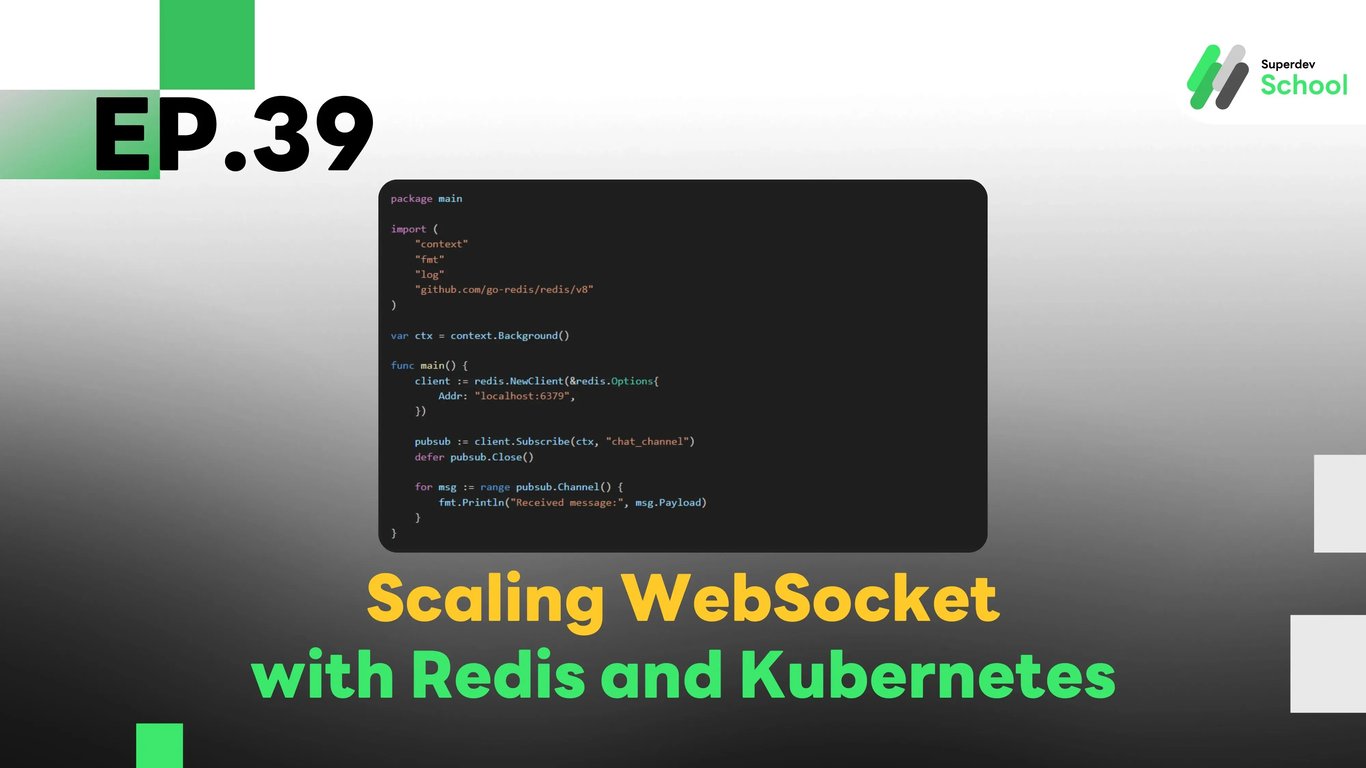
EP.39 Scaling WebSocket with Redis and Kubernetes
#Horizontal Scaling
#High Availability
#Microservices
#Real-Time API
#Golang
#Go
#Kubernetes
#Redis Pub/Sub
#WebSocket Load Balancing
#WebSocket Scaling
Why Scale WebSocket?
WebSocket allows real-time communication, but as user numbers grow, server load can increase beyond capacity. Redis Pub/Sub and Kubernetes help scale WebSocket to handle high traffic efficiently.
System Architecture for Scaling
- Client - Connects to WebSocket
- Load Balancer - Distributes load to multiple WebSocket Servers
- WebSocket Servers - Handles real-time connections
- Redis Pub/Sub - Syncs data between multiple WebSocket Servers
- Kubernetes Cluster - Manages multiple WebSocket Servers
Using Redis Pub/Sub to Synchronize WebSocket Servers
Redis Pub/Sub allows WebSocket Servers to exchange messages in real-time.
Example: Implementing Redis Pub/Sub with WebSocket
File: websocket_redis.go
package main

import (
    "context"
    "fmt"
    "log"
    "github.com/go-redis/redis/v8"
)

var ctx = context.Background()

func main() {
    client := redis.NewClient(&redis.Options{
        Addr: "localhost:6379",
    })

    pubsub := client.Subscribe(ctx, "chat_channel")
    defer pubsub.Close()

    for msg := range pubsub.Channel() {
        fmt.Println("Received message:", msg.Payload)
    }
}
Using Kubernetes for Scaling WebSocket Servers
Kubernetes Deployment automates the management of multiple WebSocket Servers.
Kubernetes Deployment YAML File
apiVersion: apps/v1
kind: Deployment
metadata:
  name: websocket-server
spec:
  replicas: 3
  selector:
    matchLabels:
      app: websocket-server
  template:
    metadata:
      labels:
        app: websocket-server
    spec:
      containers:
      - name: websocket-server
        image: my-websocket-server:latest
        ports:
        - containerPort: 8080
Challenge!
Try configuring Kubernetes Horizontal Pod Autoscaler (HPA) to dynamically adjust the number of WebSocket Servers based on user load!
Next Episode
In EP.40, we will explore GraphQL Subscription with WebSocket in Kubernetes to enhance real-time API performance 🚀